

New growth, new hope
Print Price: £90Original Price: £1,220
Print Price: £65
Original Price: £990
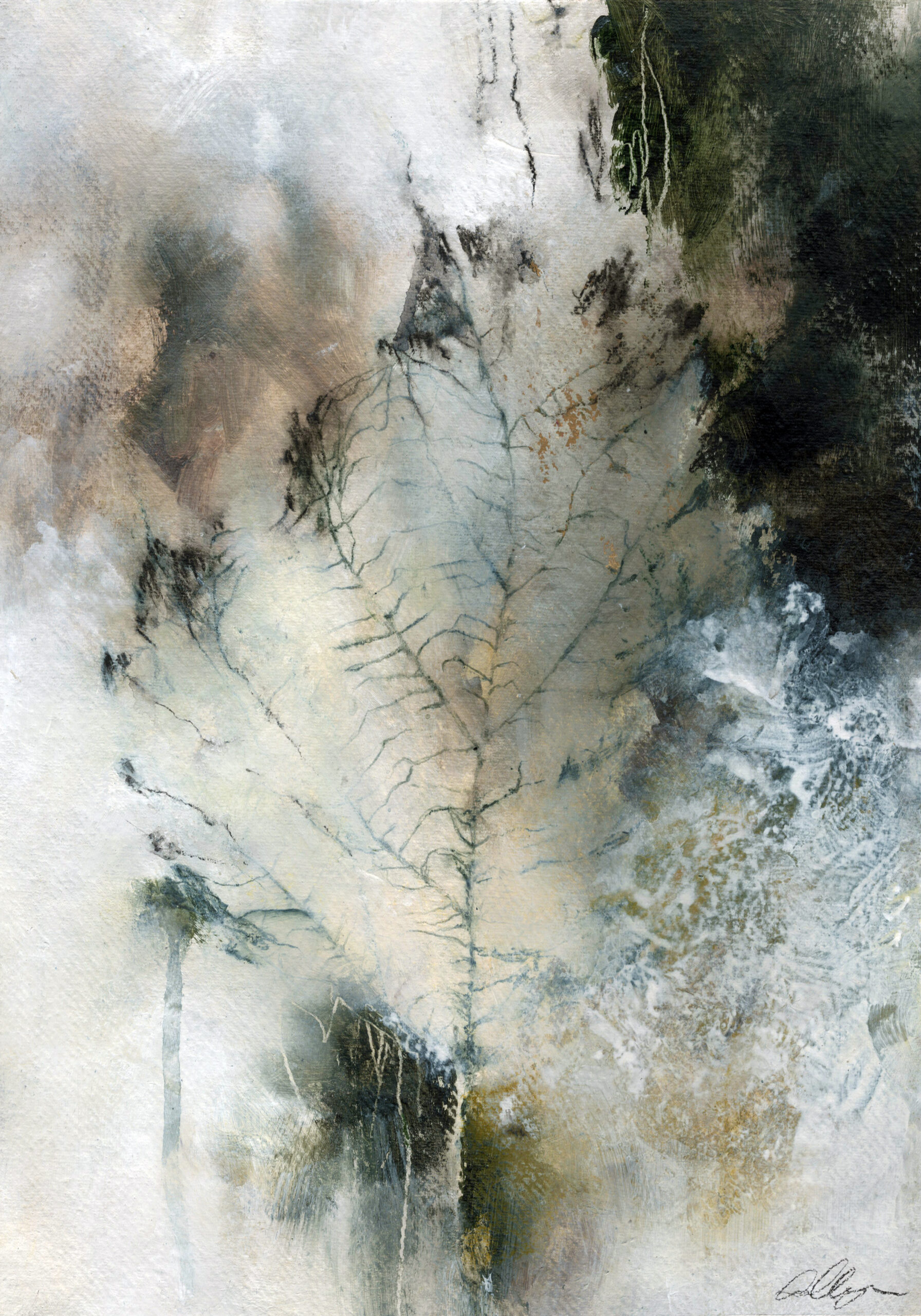
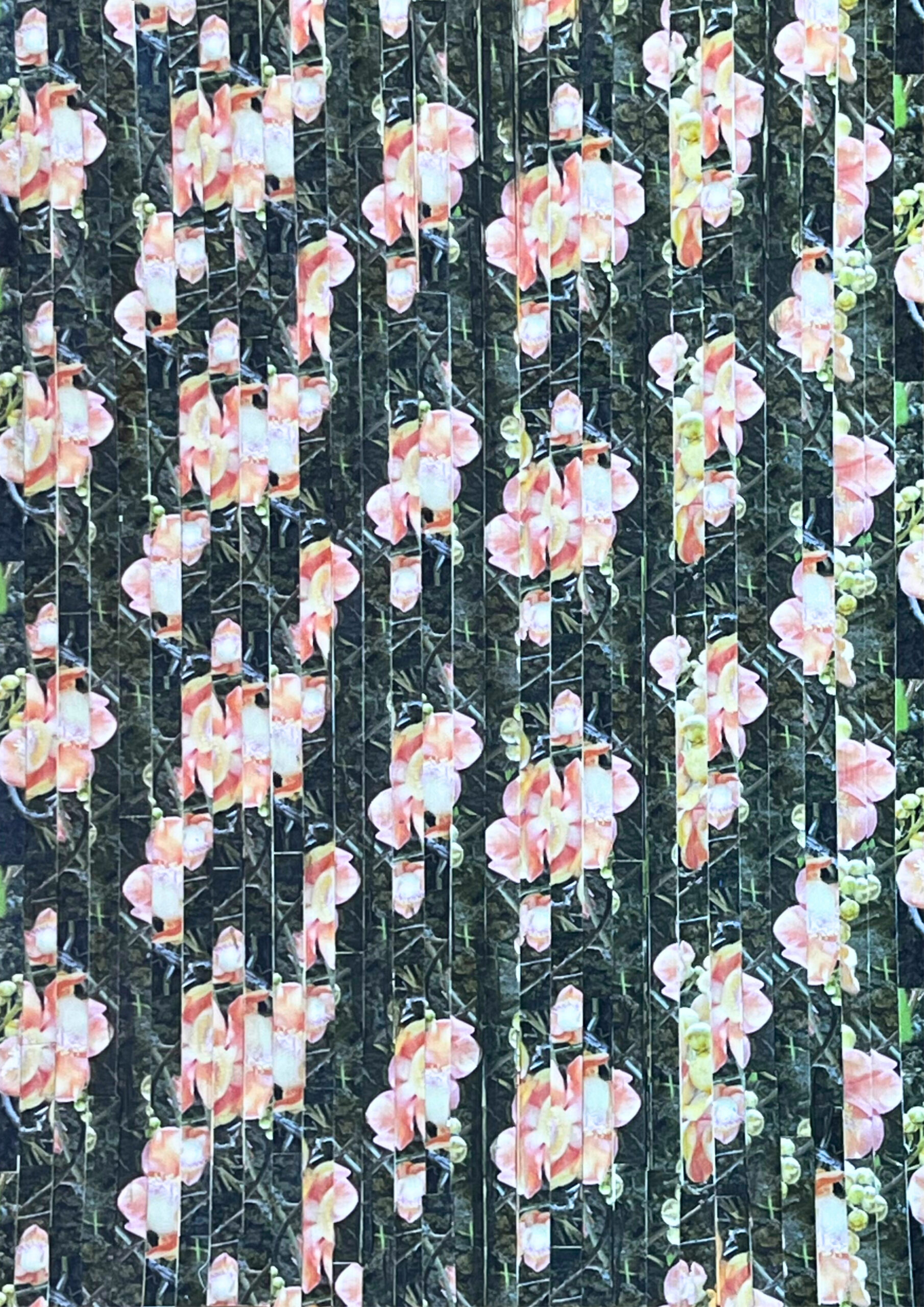
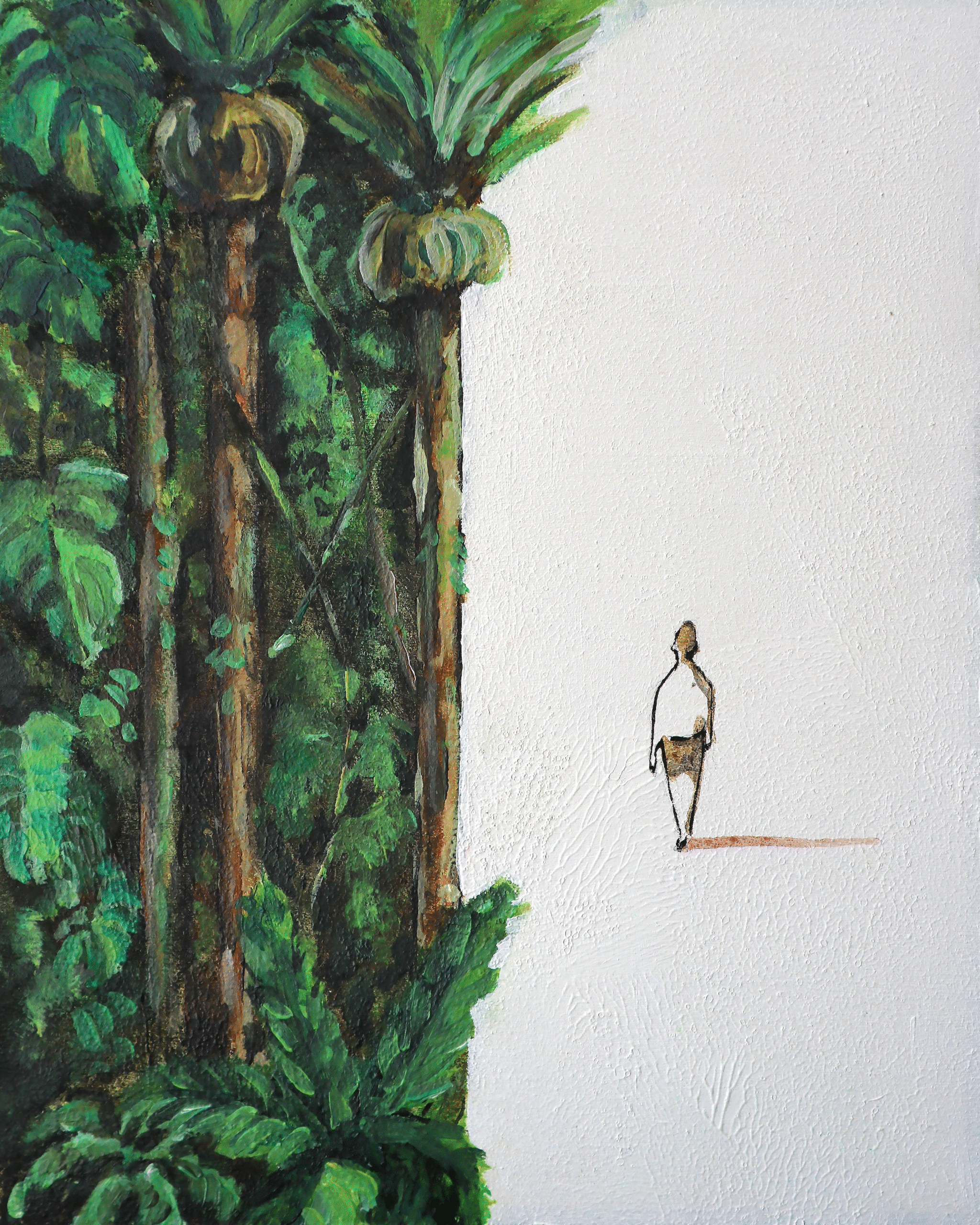
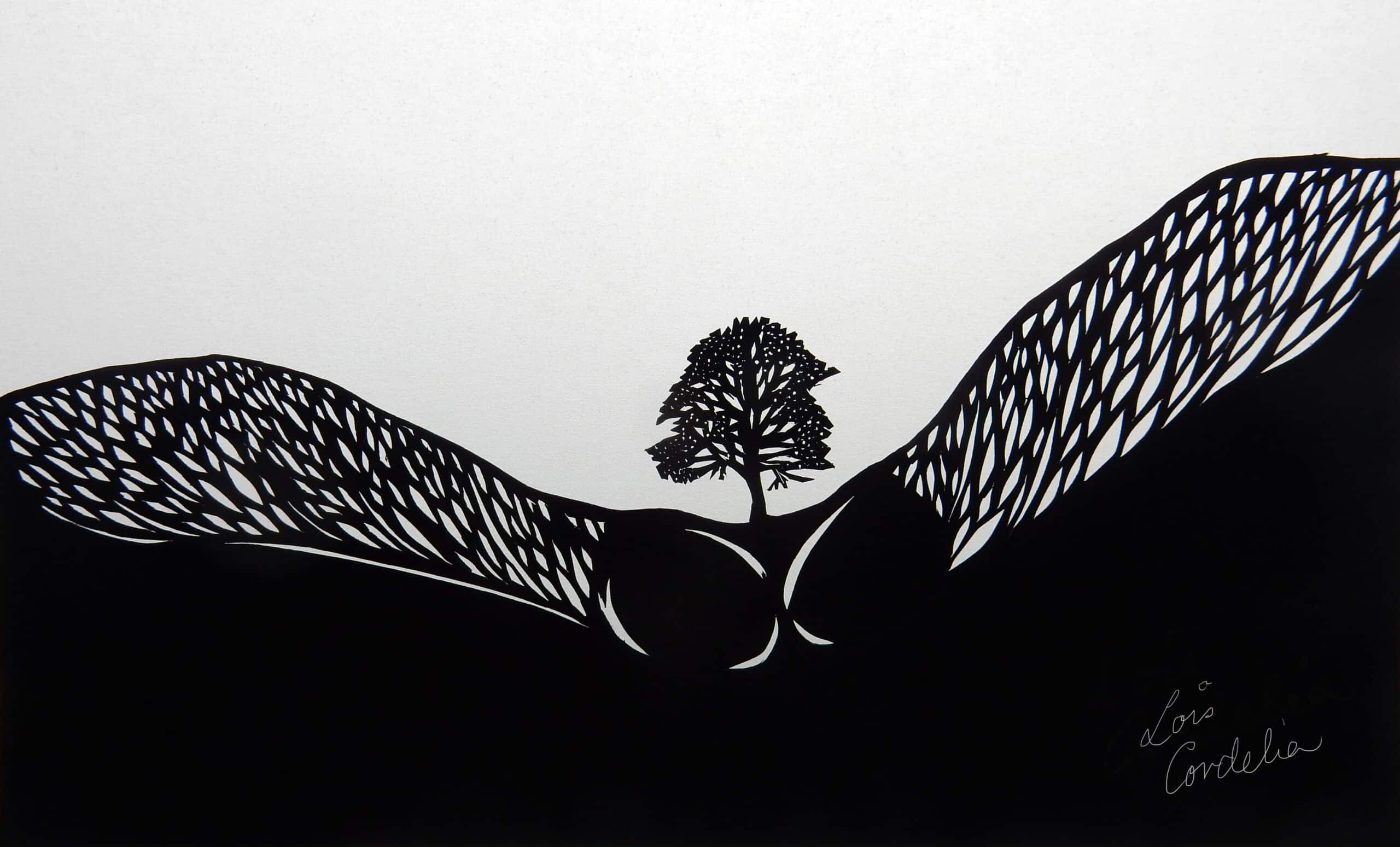
Fading Certainties reflects how the transient nature of judgment and the destructive certainty of our decisions have unsettled the future of nature’s familiar rhythms, systems that have endured for millennia.
Through water-washed layers, disrupted by fine line and stark contrast, the artwork suggests that while much is fading, traces remain—quietly asserting a resilience that outlasts our fleeting judgments.
| Category | Forests |
|---|---|
| Original size | 28 x 39.5cm |
| Print Size | 29.7 x 42cm |
| Medium | Painting |
| Material | Acrylic, pencil & pastel on cotton rag paper |
| Rarity | Unique |
| Signature | Signed in bottom corner of painting |
As a textile artist and painter, Libby’s work explores the convergence of art, design, ecology, anthropology and agricultural practice, driven by a commitment to shared environmental responsibility. In response to the climate crisis and acknowledging the textile industry’s significant impact, her art is grounded in the principles of regeneration and traceability.
Spotlighting tier 4 of the textile supply chain, she addresses the origin of raw materials, which are often overlooked, yet critical to understanding the textile industry’s impact on ecosystems and communities. Libby draws from first hand experience of our global cotton supply chain across North India and the resurgence of the UK hemp industry.
Her work celebrates the beauty of our natural world with a profound awareness of environmental impact, nurturing circular thinking and an ongoing dialogue on sustainability that invites engagement and interpretation.


A Mexican environmental scientist committed to promoting justice for all living beings in the face of unsustainable development. He holds a bachelor’s degree in Environmental Sciences and Health, as well as a master’s and PhD in Environmental Sciences. He currently serves as an associate researcher at the Universidad Autónoma de San Luis Potosí (Mexico), and work as an environmental consultant in the implementation of the Minamata Convention in Mexico.
For nearly a decade Carlos’s work has focused on environmental issues related to chemical pollution from mining and metallurgical activities. He has extensive experience assessing the human health impacts of mercury and arsenic pollution in artisanal mercury mining sites. He has also contributed to ecological risk assessments in areas affected by primary mercury mining and arsenic-copper smelting, many of which are in important natural protected areas. Throughout his academic career, he has published several scientific papers in international journals, participated in national congresses on toxicology and biological conservation, and supported the academic community by supervising undergraduate research projects.
His current approach is grounded in a human and nature rights perspective. He believes that protecting the rights of all living beings is essential, not only to ensure the survival of both human and non-human life in the face unsustainable development, but also to guarantee that all beings can live dignified lives. In this context, and as a member of Sycomore, Carlos believes that the integrating art and science is an innovative and powerful way to help shift away from destructive human development towards a model that respects all life on Earth.
Jhon holds a Bachelor’s degree in Government and International Relations from Universidad Externado de Colombia and is currently in the final stage of his Master’s in Public Policy at Universidad Nacional de Colombia.
His research focuses on deforestation in the Amazon and explores how the European Union’s policies could serve as a model for addressing this critical issue. With a strong background in government affairs and public relations, Jhon has worked as a relations specialist, collaborating with diverse stakeholders, including the private sector, public institutions, embassies, multilateral organizations, and civil society.
A research scientist and data analyst with a Master’s degree in Ecology, Conservation and Evolutionary Biology. Matthew’s work focuses on understanding how environmental factors like climate change, biodiversity loss, and habitat degradation impact ecosystems.
He has experience in data analysis, predictive modelling, and ecological research, using scientific methods to uncover insights and drive informed decision-making. His Master’s research explored the health and fitness dynamics of Carneddau ponies, analyzing biomarkers and their relationship to environmental factors.
Passionate about applying science to solve real-world challenges, using data-driven approaches to inform conservation efforts and sustainable solutions.
IPO stands for Impact Provenance Original
it’s the score that tracks the environmental purpose and long-term impact connected to this artwork, created through Sycomore’s patented impact system.
An original, hand-crafted artwork created exclusively for the environmental challenge described in this collection.
The artist has personally safeguarded it since completion and releases it only when your offer is accepted, ensuring true rarity and authenticity.
Each Unique Piece is permanently recorded in Sycomore’s Impact Provenance & Ownership (IPO)™ system, a secure, patent-protected ledger available only through Sycomore, certifying origin, mission, and ownership—your lasting proof of both artistic value and environmental impact.
Your artwork is accompanied by a Certificate of Authenticity & Ownership, the definitive proof that it is an original Sycomore creation.
Each certificate carries the Dual Signature™—personally signed by the artist and by the scientist or scientists whose research inspired the work.
This trademarked, patent-protected system is unique to Sycomore, creating a bond between creativity and science found nowhere else.
Every owner and artwork is permanently recorded in the Sycomore Ownership Ledger, our secure, impact-driven registry.